
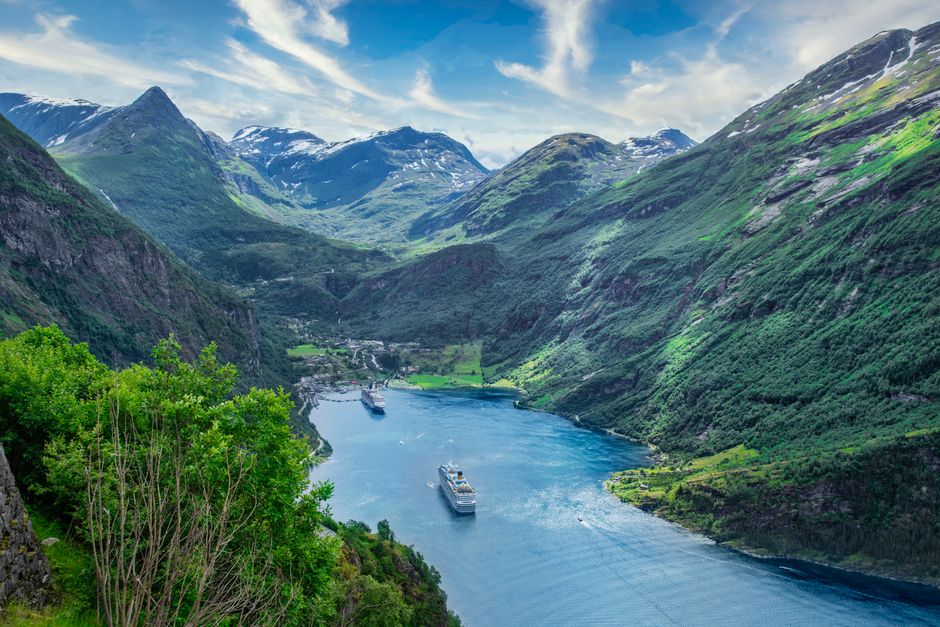
The common misconception is that a fjord holiday means sitting on a large ship and watching the scenery pass. For families, the stronger plan is a slow land-and-water route with short travel days, easy walks, reliable indoor options and only one or two major transfers. The Norwegian fjords reward that approach because children can switch between boats, trains, beaches, waterfalls and villages without needing a packed schedule.
Is a Norwegian fjord holiday good for children?
What children actually enjoy
Yes, but the appeal is not the same for every age group. Younger children usually respond to movement: a boat entering a narrow fjord, a train climbing through tunnels, goats near a farm or a waterfall close enough to feel its spray. Older children often enjoy the visible geography. A fjord makes a mountain feel understandable because the water cuts directly between steep rock walls. That gives the landscape a story instead of making it one more view from a car window.
Where the strain appears
The difficult part is the transfer pattern. A family may face a train, a coach, a ferry and a walk on the same day. That can work once, but repeating it for five days creates tired children and tense adults. Build in two nights at each main base, keep one unplanned afternoon after every long journey and choose accommodation within walking distance of food. A family summer holiday in the Norwegian fjords works best when the scenery supplies the entertainment and the itinerary leaves room for naps, rain and slow breakfasts.
How many days do you need in the fjords?
Five days: choose one compact region
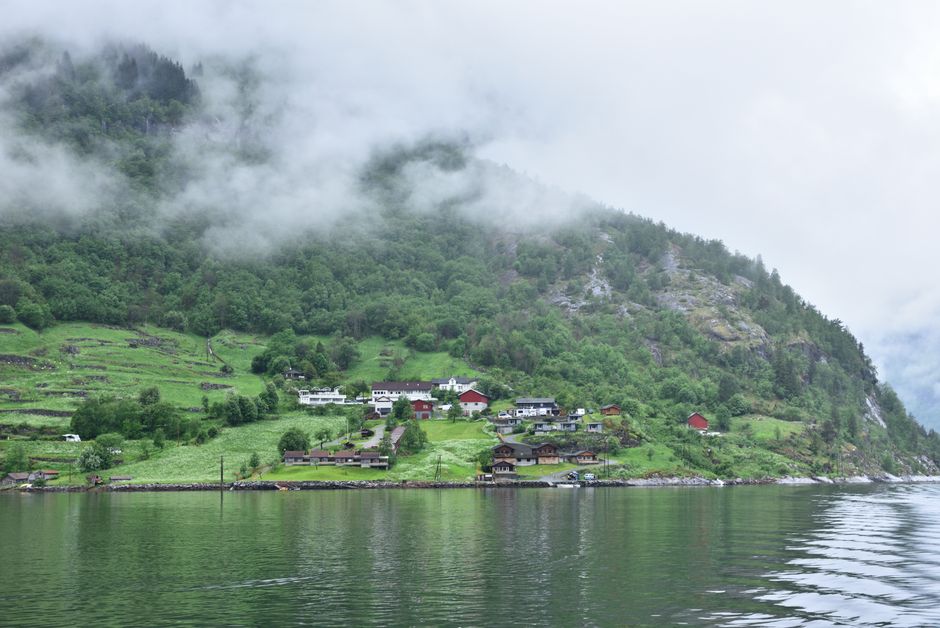
Five days is enough for a first visit if the family accepts a narrow route. Bergen plus Flåm and the Aurlandsfjord is the most practical short trip. Spend two nights in Bergen, travel to Flåm or Aurland for two nights, then return or continue toward Voss. This gives you a city, a fjord cruise, a scenic railway and short walks without forcing a complete change of hotel each night. Avoid adding Geirangerfjord to this plan. The map looks manageable, but road and ferry connections take longer than many families expect.
Seven to ten days: add depth, not distance
With a week or more, choose either the Sognefjord area or the Geirangerfjord and Sunnmøre area. Do not try to cover every famous viewpoint. A seven-day route can use Bergen as the arrival point, move to Balestrand or Aurland, continue to Loen or Stryn, and finish with two nights near Ålesund. That route offers fjord water, mountain roads, villages and moderate walks, but it still needs careful checking of ferry times.
Ten days allows a rest day after each large transfer and makes weather less threatening. Summer weather can change within hours, so a spare day has real value. It can rescue a boat trip cancelled by wind, replace a wet hike with a museum visit or simply prevent the family from treating every morning as a race.
What does a family fjord itinerary cost?
The largest mistake in budgeting is counting the accommodation and ignoring transport. Fjord travel often uses several paid legs, and a scenic route can cost more than a direct route even when the distance is short. Treat the figures below as planning benchmarks, not promises. Summer fares, exchange rates, child ages, cabin types and booking dates change the final total.
Transport benchmarks for 2026
| Travel option | Published or stated scale | Best use | Budget warning |
|---|---|---|---|
| Fjord Tours Norway in a Nutshell | From NOK 2,698 per person for a listed route | One coordinated train, boat and coach day | Children and departure points change the fare |
| Flåm Railway | 20 kilometres with about 865 metres of elevation change | A focused half-day scenic experience | Return tickets and peak departures sell quickly |
| Norled FJORDcard | Unlimited travel for five days on selected fast ferries | Families moving between eligible coastal stops | It does not cover every route or every operator |
| Hurtigruten Coastal Express | About 2,500 nautical miles, 34 ports and 12 days on the full route | Families wanting the ship to be the accommodation | Discounted off-season fares are not a guide to summer prices |
How to build a realistic family budget
For a family of four, price each transport leg separately before choosing hotels. Add meals, luggage storage, local buses, attraction tickets and a 15 percent weather buffer. A cabin or apartment with cooking space may cost more per night but reduce restaurant spending. My clear value verdict is a two-base land itinerary for most families: it usually gives more control over sleeping arrangements and daily activity than a full coastal voyage, while retaining the most memorable boat and rail experiences.
Which fjord route works best for a family?
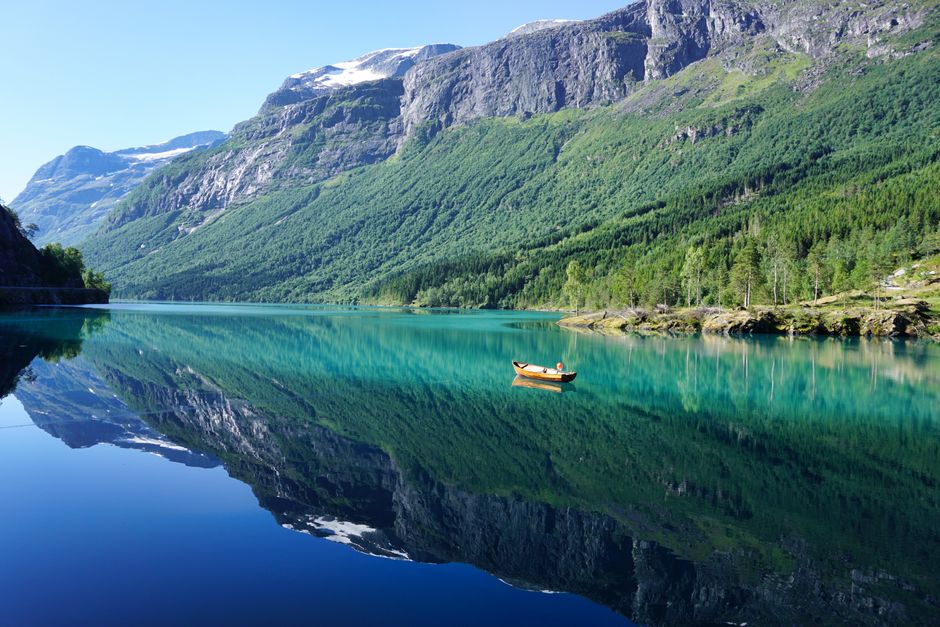
The most reliable first-trip route is Bergen, Flåm or Aurland, then two quiet nights near the water. It has the right balance of transport variety, short walks, food access and fallback activities. Use this sequence as a framework rather than a fixed tour.
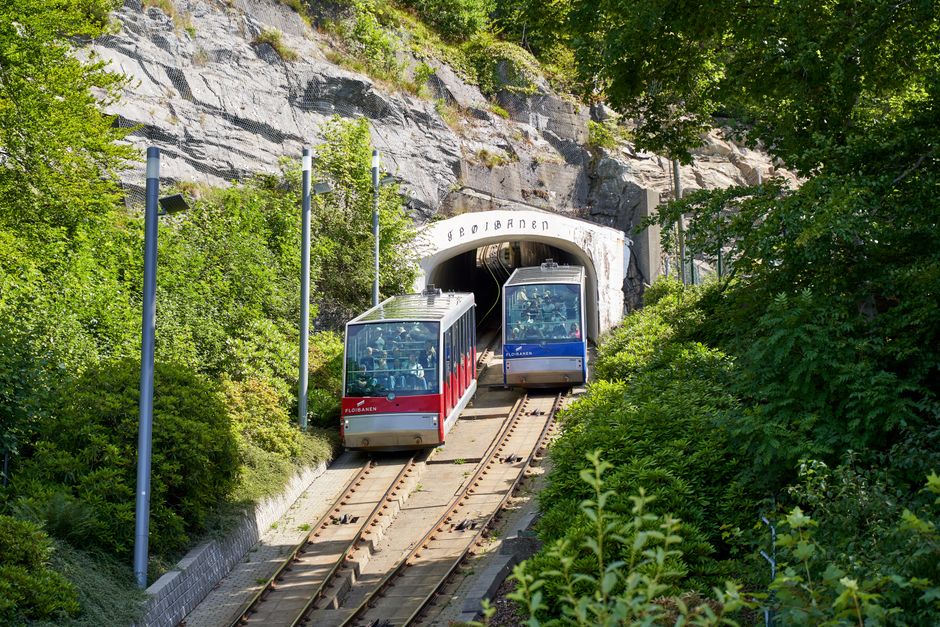
- Days 1 and 2: Bergen. Keep the first day light after the flight. Use the harbour, aquarium or a short funicular trip if the weather is clear. Bergen is the best place to buy forgotten layers and groceries before entering the smaller fjord communities.
- Day 3: move toward Flåm. A combined train, boat and coach journey creates a memorable travel day, but reserve seats and explain the changes to children beforehand. The Flåm Railway covers 20 kilometres and climbs steeply from the valley to Myrdal, making the train itself the attraction.
- Days 4 and 5: slow down. Choose a short kayak session, a village walk or a farm visit instead of another major excursion. Aurland is calmer than Flåm, while Flåm has more transport connections and food choices. Pick the base that matches the family rather than trying to sleep in both.
- Days 6 and 7: add one extension. Continue toward Voss for easier rail connections, or stay in the Sognefjord region for a second boat day. Do not add a distant fjord simply because it appears on a map. The best route is the one that preserves energy for the landscape.
Vy trains are useful for the long inland sections, while Norled ferries can make the journey feel like an activity rather than a transfer. The winner for younger children is the shorter route with two-night stays; teenagers may prefer the longer route with a mountain walk or guided paddle.
What can go wrong on a fjord trip?
What if rain cancels the main activity?
Rain is normal, and heavy weather can affect boat schedules. Keep one indoor option in every base, such as a museum, swimming pool, science centre or café district. Never place the airport transfer on the same day as the trip you most want to take. If a missed ferry would break the itinerary, the schedule is too tight.
What if the family becomes tired of transfers?
Drop an attraction before dropping a rest period. A fjord holiday fails when every beautiful stop becomes a deadline. Pack snacks for the longest connection, reserve accommodation near the arrival point and avoid changing hotels for a single viewpoint.
Does travel insurance remove the risk?
No. Check cancellation, missed connections, medical treatment, evacuation, baggage and activity exclusions line by line. AM Best financial-strength ratings can offer information about an insurer’s ability to pay claims, while J.D. Power scores, where a relevant travel-insurance comparison is available, may indicate service experience. Neither measure proves that a particular policy covers a cancelled ferry or a child who becomes ill.
There are no general US state-specific insurance requirements for visiting Norway, but premiums vary by state and individual factors, including age, trip cost, medical history and selected activities. Get multiple quotes and compare the wording, not just the headline price. A policy that excludes kayaking, hiking above a stated altitude or pre-existing conditions may be cheap because it leaves out the risks your family actually faces.
What should families pack and book first?
Book the transport with limited capacity first, then choose accommodation around it. That order prevents a common error: reserving a perfect apartment and discovering that the only practical ferry arrives two hours after check-in or leaves before breakfast.
The small kit that earns its space
Each adult should carry a waterproof shell, a warm mid-layer and shoes with grip. The Helly Hansen Moss Rain Coat is a recognizable example of a fully waterproof outer layer, while KEEN Targhee IV Waterproof shoes suit families planning rougher paths than a town pavement. For luggage, the Osprey Farpoint 40 offers a 40-litre travel-pack format that works well when every passenger needs to handle their own bag. These are examples, not mandatory purchases; the useful features are waterproofing, repairable straps and a size children can carry.
What to reserve before departure
Reserve the long train or ferry legs, family rooms, and any activity with a fixed group size. Leave ordinary walks and town visits flexible. Add an Apple AirTag or similar tracker to checked luggage if the family is changing transport types, and carry a 1-litre reusable bottle for each person because food and drink options become less frequent outside the main villages. Avoid overpacking formal clothes, several pairs of shoes or bulky beach equipment.
A successful family summer holiday in the Norwegian fjords is less about collecting famous viewpoints than managing energy, weather and connections. As transport networks improve and more families seek lower-impact holidays, the strongest fjord itineraries will be the ones that make slower travel feel like the main attraction.