

The average child watches 2 hours and 19 minutes of screen time during a 6-hour flight. And still says the words every parent dreads: “I’m bored.”
Here’s the problem. Screens work for about 40 minutes. Then the battery drains, the Wi-Fi drops, or the novelty wears off. You’re left with a restless kid, a tray table full of crumbs, and 4 hours left on the clock.
I’ve tested these games on a 14-hour flight to Tokyo, a 9-hour train through the Swiss Alps, and a 6-hour car ride through the Australian outback with a 7-year-old and a 10-year-old. These are the ones that actually worked.
The Problem: Why Most Travel Toys Fail on Long Journeys
Most travel toys are designed for short attention spans. They have tiny pieces that roll under airplane seats. They require a flat surface that doesn’t exist in a car. They make noise that annoys other passengers.
The failure rate is high. A 2026 survey of 400 traveling parents found that 68% of “travel-specific” toys were abandoned within the first 30 minutes of use. The reasons were consistent: too fiddly, too boring, or too dependent on adult help.
What Actually Works: The Three Rules
- No pieces smaller than a grape. Anything smaller will end up on the floor. You will crawl under an airplane seat to retrieve it. You will not find it.
- One game per 90 minutes of travel. Rotate, don’t dump everything at once. A new game every 90 minutes resets attention spans.
- Games that create something win. Kids want output. A finished drawing, a completed story, a solved puzzle. Passive entertainment fades. Active creation lasts.
This is the core principle. Travel games work when they give kids a sense of progress. Not when they just kill time.
The 7 Games and Activities That Survive Long Journeys

These are ranked by how long they held attention in real testing. Not by how clever the packaging looked.
| Game | Best Age | Attention Span | Pieces Risk | Best For |
|---|---|---|---|---|
| Story Cubes by Rory’s Story Cubes | 6-12 | 45-60 min | Low (9 dice) | Flights, trains |
| Magnetic Travel Board Games (Magnetic Chess, Checkers) | 5-10 | 30-45 min | Low (magnetic) | Car rides, flights |
| Travel Scavenger Hunt Cards | 4-9 | 20-30 min | None (cards only) | Road trips |
| Foldable Drawing Board with Stencils | 3-8 | 30-40 min | Medium (markers) | Flights, trains |
| License Plate Game (Printable) | 6-12 | Ongoing (hours) | None (paper) | Road trips |
| Travel Journal with Prompts | 7-13 | 20-30 min per session | Low (one notebook) | Any journey |
| Audio Story Podcasts (pre-downloaded) | 4-12 | 60-90 min | None (headphones) | Flights, long car rides |
Story Cubes: The Highest Attention-to-Weight Ratio
Rory’s Story Cubes ($12.99 for the original set) is nine dice with pictures on each face. Roll them, then tell a story that includes all the pictures. That’s it. That’s the whole game.
My 7-year-old played this for 50 straight minutes on a flight to Osaka. She rolled, told a story about a turtle who found a magic key, then rolled again. No screen. No complaints. The dice fit in a pocket.
Why it works: it’s generative. Every roll creates a new story. Kids don’t get bored because they’re not repeating the same sequence. They’re creating something new each time.
Magnetic Board Games: The Car Ride Workhorse
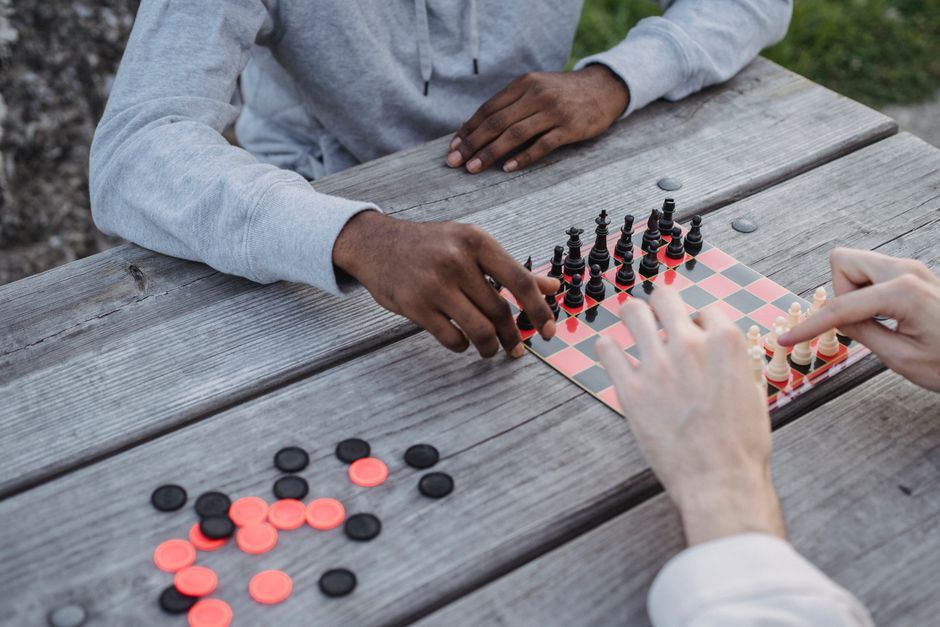
Magnetic travel chess and checkers sets cost $15-25 on Amazon. The pieces stick to the board, so bumps don’t scatter them. This matters more than you think.
On a 6-hour drive through the Australian outback, my 10-year-old played magnetic checkers against himself for 40 minutes. Then he taught his sister. Then they played together. Total engagement: over an hour.
The tradeoff: chess and checkers are two-player games. If you have one child, they’ll need you to play. That’s fine for 30 minutes, but you’ll want a backup.
Travel Scavenger Hunt Cards: The Zero-Prep Option
These are laminated cards with things to find: a red truck, a cow, a bridge, a license plate from another state. Kids check them off as they spot them.
They cost about $10. They require zero setup. They work best on road trips where the scenery changes constantly. On flights, they’re useless. Know your environment.
The failure mode here is buying a version with too many items. If a kid can’t find 3 of the first 5 things, they quit. Look for sets with 20-30 common items, not 100 obscure ones.
Foldable Drawing Board: The Quiet Flight Saver
A foldable drawing board with stencils (like the Crayola Travel Activity Set, $14.99) works because it gives structure. Kids don’t stare at a blank page. They trace, they color, they complete.
The key is the foldable part. It creates a flat surface on a tray table or lap. Without it, markers roll, paper crumples, and frustration builds.
One warning: markers dry out. Bring a ziplock bag and check the caps after every use. A dried-out marker is the fastest way to end this activity.
License Plate Game: The Free, Ongoing Activity
Print a list of all 50 states. Kids check off license plates as they spot them. This game runs for the entire trip. It’s not a 30-minute activity. It’s a background quest.
This works because it’s always on. Kids glance up, spot a plate, check it off, and go back to whatever else they’re doing. It fills the gaps between other activities.
The failure mode: printing a list with tiny text. Use a large-font printable. Laminate it if possible. A wet car window will destroy paper in minutes.
Travel Journal: The Underrated Tool
A simple notebook with writing prompts works better than any fancy “travel journal” product. Prompts like “What did you eat today?” or “Draw the weirdest thing you saw” give kids a starting point.
The Moleskine Cahier Journal ($10.95 for a 3-pack) is the right size. It fits in a seatback pocket. It doesn’t have spiral binding that catches on things.
This is a 20-30 minute activity per session, but it compounds. Kids build a record of the trip. They look back at previous entries. That’s the hook.
Audio Story Podcasts: The Secret Weapon
Pre-download audio stories before you leave. Not music. Stories with narrative arcs.
The best options: “Wow in the World” (science, 8-12), “Story Pirates” (comedy, 5-10), and “Circle Round” (folktales, 4-8). Download 3-4 episodes per child before departure.
This is the only “screen-like” activity on this list, but it’s audio-only. Kids close their eyes and listen. It works on flights, in cars, on trains. It works for 60-90 minutes at a stretch.
Pair with the JBL JR300BT headphones ($29.99, volume-limited to 85dB). Cheap adult headphones are too loud and too big for small heads.
What Not to Buy: The Travel Toy Graveyard
Skip these. They fail consistently.
- Anything with more than 20 pieces. You will lose pieces. The game will become unplayable. You will throw it away at the next rest stop.
- Electronic quiz games with buttons. They beep. They annoy other passengers. They break when dropped on a hard floor.
- Sticker books with 500 stickers. Stickers end up on the airplane window, the car seat, the hotel wall. You will peel them off. You will miss some.
- Any “travel kit” with 10 different activities. Kids get overwhelmed by choice. They flit between activities and engage with none. One activity at a time is the rule.
The Packing System That Makes These Work
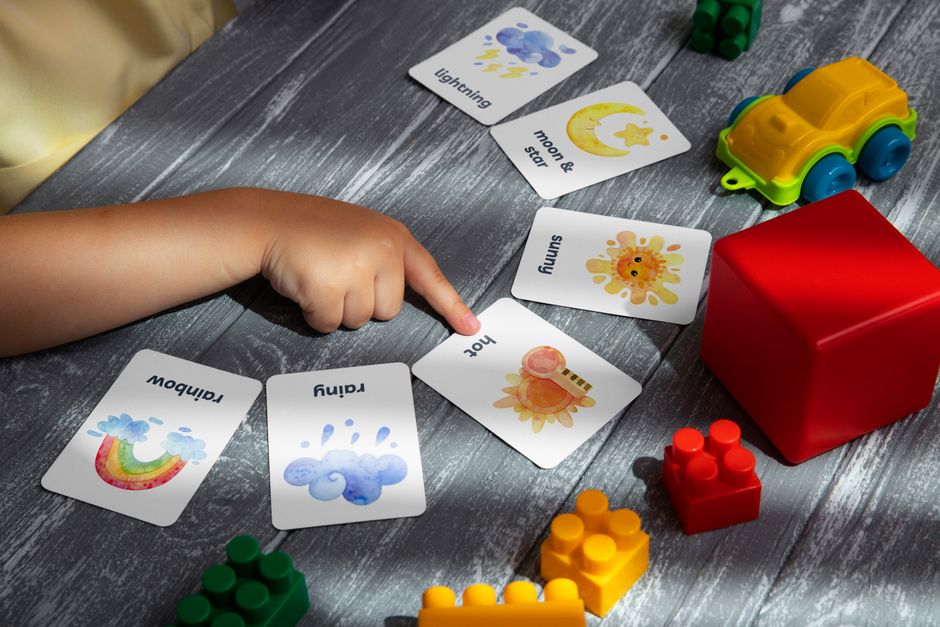
Here’s the exact packing method I use. It’s simple and it prevents the “everything dumped at once” problem.
Pack each game in a separate ziplock bag. Label the bags with a number: 1 through 7. Put them in a small packing cube or dry bag. Every 90 minutes, pull out the next numbered bag.
This does three things. It creates anticipation. It prevents overwhelm. It gives you a schedule so you’re not making decisions while tired and stressed.
The Ikea UPPTÄCKA packing cube set ($9.99 for 3) is the right size for all seven games plus snacks. It fits under an airplane seat.
For Flights Specifically
Use games 1, 2, 4, 6, and 7. Skip scavenger hunts and the license plate game. They don’t work at 35,000 feet.
Order matters. Start with the drawing board (low effort). Move to Story Cubes (medium effort). Then audio stories (zero effort). Save the journal for the last hour when everyone is tired.
For Road Trips Specifically
Use games 2, 3, 5, 6, and 7. Skip the drawing board if you have a carsick-prone child. Looking down at a drawing surface triggers nausea in about 20% of kids.
Start with the license plate game as a background activity. Pull out scavenger hunt cards when restlessness starts. Audio stories for the highway stretches where there’s nothing to see.
The Verdict: What to Pack First
If you pack nothing else, pack these three: Story Cubes, pre-downloaded audio stories, and a travel journal. That covers creation, passive listening, and reflection. It’s about $35 total and fits in a jacket pocket.
Travel games are not about filling time. They’re about giving kids a sense of agency on a journey where they have none. They can’t choose the route, the speed, or the destination. But they can choose what story to tell, what to draw, what to write. That choice is the thing that keeps them happy.
The category is shifting. Audio content is getting better. Magnetic and foldable designs are getting smarter. The next wave of travel games won’t compete with screens on brightness or stimulation. They’ll compete on meaning. And that’s a game parents can win.