
Thailand sees roughly 40 million international tourists a year, and a solid chunk of them will eat something from a street cart within their first 24 hours. Most will be fine. A small percentage will spend a night hugging a toilet in a Bangkok hotel room. The difference is rarely luck. It’s a set of observable, learnable signals that take about five seconds to check.
This guide covers exactly what to look for, what to skip, and how to navigate markets without spending your trip in a pharmacy. No fear-mongering. No “just eat where locals eat” platitudes that don’t help when you’re standing in front of 40 identical pad thai carts at 9pm.
The 5-Second Stall Check: A Visual Triage System
You don’t need a food safety certification to spot problems. You need a mental checklist that runs fast. Here’s the one I use, in order of importance:
1. Fire and Volume
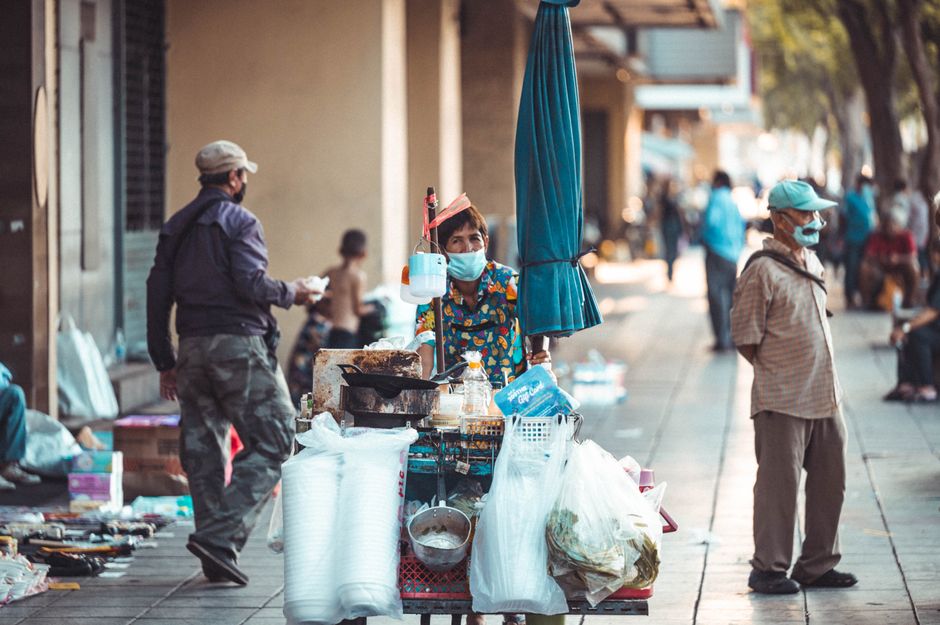
A wok burner at full blast is a pasteurization machine. The stall should have visible flames, sizzling oil, or a pot at a rolling boil. Heat kills most of what will hurt you. A stall with pre-cooked food sitting lukewarm in trays is a higher-risk bet than a cart actively cooking to order. This is why stir-fried dishes like pad see ew and pad kra pao are statistically safer than pre-sliced fruit or room-temperature curries.
2. Turnover Rate
Count the customers. A stall with a queue of Thai office workers at lunch means ingredients are moving fast. Fast turnover means fresh oil, fresh meat, fresh everything. An empty stall at 7pm is empty for a reason. Locals know which carts gave someone a bad night. Follow the crowd.
3. The Ice Test
Ice in Thailand is generally made in commercial factories with filtered water. It’s safer than you think. But the container it sits in matters. Look for ice with rounded edges or a tubular shape with a hole through the center — that’s factory-made ice. Crushed, irregular shards might be made from tap water. For drinks, factory ice is fine. For raw seafood on ice, you’re now trusting the seafood’s entire cold chain, not just the ice.
4. The Condiment Station
This is the tell. A clean, organized condiment setup—fish sauce bottles wiped down, chili trays covered, no flies swarming—signals a vendor who pays attention. A sticky, crusty, fly-covered condiment tray means the vendor cuts corners you can’t see. Trust the condiment station. It’s the stall’s hygiene report card.
What to Eat and What to Skip: A Dish-by-Dish Verdict
Some dishes are structurally safer than others. Here’s the breakdown.
| Dish | Risk Level | Why | Verdict |
|---|---|---|---|
| Pad Thai (cooked to order) | Low | High heat, fast turnover, no raw ingredients | Eat it |
| Som Tam (green papaya salad) | Medium | Raw vegetables, mortar and pestle may not be washed between orders, sometimes includes raw crab | Order without raw crab |
| Moo Ping (grilled pork skewers) | Medium | Often pre-grilled and held at warm temps; risk rises if sitting long | Only if actively grilling |
| Pre-cut fruit from a cart | High | Unknown wash water, sitting in heat, peeled hours ago | Skip it. Buy whole fruit instead |
| Boat noodles (kuay teow ruea) | Low | Boiling broth, meat cooked in liquid, high turnover at dedicated shops | Eat it |
| Raw oysters / shrimp | High | No heat kill step, cold chain uncertain at street level | Skip unless at a reputable seafood restaurant |
| Mango sticky rice | Low | Fruit peeled to order, rice cooked, coconut milk heated | Eat it |
One thing people don’t talk about enough: som tam is the dish most likely to cause problems for first-timers. Not because of the papaya itself, but because the mortar and pestle might not be washed between customers, and the raw crab version (som tam pu) adds shellfish risk on top. If you want som tam, order it mai sai pu (no raw crab) and ask for it phed noi (less spicy) if your stomach isn’t used to heavy chili.
Bottled Water vs. Tap: What Actually Matters
Drink bottled water. This is not a debate. Thai tap water is treated but the pipes between the treatment plant and your glass are not something you want to test on vacation. A 1.5-liter bottle of Singha or Chang water costs 14-20 baht ($0.40-$0.60) at any 7-Eleven. Buy two. Keep one in your bag.
For brushing teeth, tap water is generally fine in Bangkok and major cities. If you’re in a rural area or on an island, use bottled water for brushing too. The risk is low but the cost of bottled water is lower.
One underrated tip: 7-Eleven in Thailand is the great equalizer. It’s air-conditioned, it sells cold water, electrolyte packets (Dechamp brand, 5 baht each), and basic stomach medication. If you feel dehydration coming on from heat or a bad meal, a packet of Dechamp dissolved in water works faster than any fancy sports drink. Every 7-Eleven has it.
The Medication You Should Pack Before You Fly
Don’t wait until you’re sick to figure out what Thai pharmacies sell. Pack these three things before you leave:
- Oral rehydration salts (ORS) — Dehydration is the real danger from food poisoning, not the bacteria itself. Pack 4-6 sachets. In Thailand, 7-Eleven sells Dechamp for 5 baht, but having one in your bag when you’re on a long bus ride matters.
- Loperamide (Imodium) — For when you absolutely need to get on a 6-hour train and can’t be within sprinting distance of a toilet. Use sparingly. Letting the bad stuff out is part of the process. But for travel days, it’s a necessary tool.
- Activated charcoal — The evidence is mixed, but many travelers swear by it for early symptom management. Available at Thai pharmacies as Carbion or Ultracarbon for under 100 baht. Start taking it at the first sign of trouble.
If you do get sick, the playbook is simple: stop eating solid food, drink ORS in small sips, rest. If you have a fever above 101°F (38.3°C), blood in stool, or symptoms lasting more than 48 hours, go to a clinic. Bangkok has excellent private hospitals like Bumrungrad International Hospital and Samitivej Sukhumvit that see food poisoning cases daily. A consultation costs 500-1,500 baht ($15-$45) without insurance. Cheap peace of mind.
Market Etiquette That Keeps You Safe
How you behave at a stall affects what you get. Vendors are watching you as much as you’re watching them.
Point, don’t grab. If you touch raw meat and then touch your face or phone, you’ve created your own contamination chain. Use the tongs provided or point at what you want. Carry hand sanitizer. Use it after handling money — Thai baht notes change hands constantly and are not clean.
Watch the vendor’s hands. If they handle raw meat and then assemble your plate without washing or changing gloves, that’s a red flag. The best stalls have one person handling money and another handling food. If it’s a one-person operation, watch how they switch between tasks.
Spice levels are not a joke. “Pet mak mak” (very spicy) at a street stall in Isaan is a different universe from “extra spicy” at an American Thai restaurant. Start with “phed noi” (less spicy) and work up. Your stomach needs time to adapt to the chili load, and a blown-out digestive system from spice is indistinguishable from food poisoning in terms of how you’ll feel at 3am.
The safest stalls in any Thai market are the ones where you can see the entire cooking process from raw to plate. No mystery boxes, no pre-sauced meat sitting in a plastic tub, no reheating in a microwave. If you can watch your food go from raw ingredients to finished dish in under five minutes, you’ve eliminated most of the risk. That’s the whole game. Heat plus speed plus visibility equals a meal you’ll remember for the right reasons.