
I spent 23 days eating my way from Hanoi to Ho Chi Minh City. I tracked every meal in a spreadsheet. 61 meals total. 14 bowls of pho. And here’s the uncomfortable truth nobody posts on Instagram: the pho was fine. Good, even. But it was rarely the best thing I ate on any given day.
The real culinary action in Vietnam happens in dishes tourists can’t pronounce. Dishes with regional loyalties so fierce that a Hanoian will tell you Saigon pho is “not real pho” and a Hoi An local will insist cao lau cannot exist outside their town’s well water.
This guide breaks down what to actually order, where to find it, and why the pho hype might be sending you to the wrong stalls.
The Pho Verdict: Good, Not Transcendent
Let’s get this out of the way first. Pho is a solid breakfast. A warm, aromatic beef broth with rice noodles, herbs, and thinly sliced meat. It costs between 40,000 and 80,000 VND ($1.60 to $3.20) at a street stall. It’s comforting. It’s cheap. It’s everywhere.
But is it the best bowl of noodles in Vietnam? No. Not even close.
Here’s what I found after 14 bowls across three cities. The broth quality varies wildly. Tourist-area pho often tastes like diluted bouillon with extra MSG. The meat portions are thin. The noodles can be mushy if the stall pre-cooks them. And by bowl number five, the flavor profile becomes predictable: star anise, cinnamon, fish sauce, beef. That’s it. That’s the range.
Compare that to bun bo Hue, a spicy lemongrass beef noodle soup from central Vietnam. The broth has actual depth. Lemongrass, shrimp paste, chili oil, beef shank, pork knuckle, sometimes congealed blood cubes. Every spoonful tastes different. It’s loud. It fights back.
Pho Bac (northern pho) is the most restrained version. Clear broth, wide flat noodles, minimal herbs. Pho Nam (southern pho) is sweeter, loaded with bean sprouts, basil, and hoisin sauce. If you only eat pho in Hanoi’s Old Quarter, you’re getting the northern version. If you only eat it in Saigon, you’re getting the southern version. Neither represents the full picture.
My verdict: Eat pho once or twice. Early morning. At a stall with a line of locals on plastic stools. Then move on to the dishes below.
Seven Dishes That Outperformed Pho Every Single Time
These are the meals I still think about months later. Ranked by how hard they hit.
1. Bun Cha — Hanoi’s Actual Signature Dish
Grilled pork patties and pork belly slices served in a warm, sweet-savory fish sauce broth. It comes with cold rice vermicelli, fresh herbs, and pickled green papaya. You dip the noodles into the broth, wrap bites in lettuce, and alternate between the charred pork and the herbs.
The best version I had was at Bun Cha Huong Lien in Hanoi — the same spot Anthony Bourdain ate with Barack Obama in 2016. It’s now called “Bun Cha Obama” on Google Maps. The combo meal costs 90,000 VND ($3.60). The pork patties are grilled over charcoal until the edges crisp. The broth is warm, not hot, and slightly sour from the vinegar. It’s a completely different eating experience from pho. Interactive. Fresh. Lighter.
If you eat one thing in Hanoi, make it bun cha.
2. Cao Lau — The Dish That Cannot Leave Hoi An
Thick, chewy noodles that look like Japanese udon but taste nuttier. Topped with sliced char siu pork, crispy pork cracklings, bean sprouts, herbs, and a tiny amount of dark, savory broth. The noodles are supposedly made with water from the Ba Le well in Hoi An, which gives them their unique texture. Whether that’s true or marketing, the dish is genuinely distinct.
I ate cao lau three times in Hoi An. The best bowl was at Ba Le Well Restaurant, a family-run spot where the recipe hasn’t changed in three generations. Price: 45,000 VND ($1.80). The pork cracklings make it. They add a crunch that pho never has.
3. Mi Quang — Central Vietnam’s Underrated Noodle Soup
Turmeric-yellow rice noodles in a shallow pool of concentrated broth. Topped with shrimp, pork, quail eggs, peanuts, and rice crackers. The broth isn’t meant to be drunk — it’s a sauce. You toss everything together and eat it almost dry.
In Hoi An, Mi Quang Ba Mua serves a version with both shrimp and pork for 40,000 VND ($1.60). The peanuts and sesame rice crackers add texture. The turmeric gives it an earthy sweetness. It’s the most underrated noodle dish in Vietnam.
4. Banh Mi — The Sandwich That Needs No Introduction
But here’s what most tourists get wrong. They go to Banh Mi Phuong in Hoi An because Bourdain praised it. It’s good. But it’s also crowded, overpriced at 35,000 VND, and the bread sits longer than it should.
The better move: find a small banh mi cart in any city around 6:30 AM. Watch for the cart with a line of motorbike drivers. The bread will be warm from a nearby bakery. The pate will be freshly spread. The fillings — cold cuts, pickled carrots, cilantro, chili — will be assembled in under 60 seconds. Price: 15,000 to 20,000 VND ($0.60 to $0.80).
In Saigon, Banh Mi Huynh Hoa is the famous spot. It’s a monster of a sandwich, packed with at least six types of meat, for 68,000 VND ($2.70). Worth trying once. But the street carts are 80% as good for 30% of the price.
5. Bun Bo Hue — The Soup That Makes Pho Look Timid
I mentioned this earlier. It deserves its own section. Originating from Hue, the former imperial capital, this soup is built on a beef and pork bone broth seasoned with lemongrass, shrimp paste, and chili oil. It comes with thick round rice noodles, beef shank, pork knuckle, and a cube of congealed pork blood if you don’t opt out.
The flavor is deep, spicy, and slightly funky from the shrimp paste. It’s the opposite of pho’s clean, restrained broth. In Hue, Bun Bo Hue O Phuong serves a bowl for 35,000 VND ($1.40). In Hanoi, the dish is harder to find but worth hunting for.
If you only have three meals in Vietnam, make one of them bun bo Hue.
6. Banh Xeo — The Crispy Pancake You Eat With Your Hands
A turmeric-tinted rice flour crepe stuffed with shrimp, pork, and bean sprouts. Fried until the edges shatter. You cut off a piece, wrap it in mustard greens or lettuce with fresh herbs, and dip it in fish sauce.
The best version I found was at Banh Xeo 46A in Saigon, a no-frills spot that’s been running for 30+ years. One pancake costs 50,000 VND ($2.00). The crisp-to-filling ratio is perfect. The dipping sauce is lighter and sweeter than northern versions.
7. Egg Coffee — Dessert Masquerading as Caffeine
Okay, not a dish. But if you’re in Hanoi, you need to try ca phe trung at Giang Cafe. Egg yolk whipped with condensed milk into a thick custard, poured over strong robusta coffee. It tastes like liquid tiramisu. Price: 35,000 VND ($1.40). The original recipe dates back to 1946 when milk was scarce and a bartender substituted egg yolk.
Go to the original Giang Cafe on Nguyen Huu Huan Street. The copycat versions around the corner are thinner and sweeter.
Regional Food Map: What to Eat Where
Vietnamese food is not a monolith. The cuisine shifts dramatically as you move north to south. Here’s the breakdown.
| Region | Signature Dish | Flavor Profile | Average Price | Best City to Try It |
|---|---|---|---|---|
| North (Hanoi) | Bun Cha | Savory, balanced, subtle | 40,000–90,000 VND | Hanoi |
| North (Hanoi) | Pho Bac | Clear broth, minimal herbs | 40,000–80,000 VND | Hanoi |
| Central (Hue) | Bun Bo Hue | Spicy, funky, deep | 35,000–60,000 VND | Hue |
| Central (Hoi An) | Cao Lau | Chewy, nutty, smoky | 40,000–50,000 VND | Hoi An |
| Central (Hoi An) | Mi Quang | Turmeric, peanut, concentrated | 35,000–50,000 VND | Hoi An |
| South (Saigon) | Banh Xeo | Crispy, sweet, herb-heavy | 50,000–70,000 VND | Ho Chi Minh City |
| South (Saigon) | Pho Nam | Sweeter broth, more herbs | 45,000–80,000 VND | Ho Chi Minh City |
Notice that pho appears twice. It’s a national dish, but it’s not the regional star anywhere except maybe Hanoi at breakfast. The regional stars are bun cha, bun bo Hue, cao lau, mi quang, and banh xeo.
Street Food Safety: What Actually Gets Travelers Sick
Everyone worries about getting sick in Vietnam. I didn’t get sick once in 23 days. Here’s what I actually did.
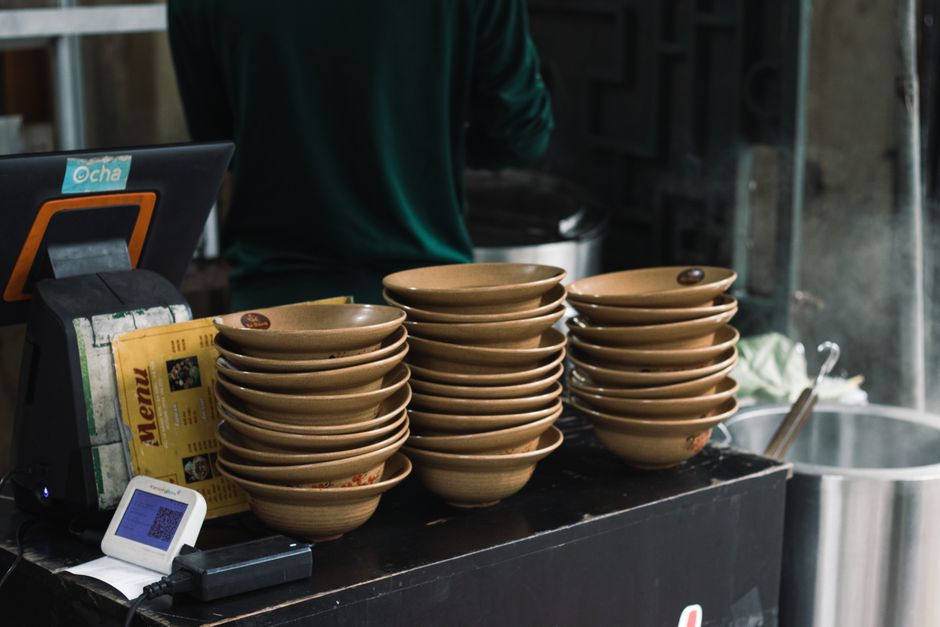
First, I only ate at stalls with high turnover. If a stall has a constant stream of locals, the ingredients are fresh because they’re constantly being used. If a stall is empty at 12:30 PM, walk away.
Second, I avoided raw herbs at tourist-oriented restaurants. The herbs at street stalls are usually washed in tap water, which can carry bacteria your stomach isn’t used to. At busy local stalls, the herbs move fast enough that they’re likely fine. At a quiet tourist restaurant, they might have been sitting out for hours.
Third, I drank bottled water and used it for brushing my teeth. Ice in drinks at established cafes is fine — it’s commercially made. Ice from street vendors is usually fine too, but I stuck to bottled drinks from busy stalls.
The biggest mistake tourists make is eating at their hotel’s restaurant for the first two days, then diving into street food without building tolerance. Your gut needs a day or two to adjust. Eat at busy local places from day one, but start with cooked dishes (pho, bun cha, banh xeo) before moving to raw herb-heavy dishes.
What Tourists Get Wrong About Vietnamese Food
Three mistakes I saw repeatedly.
Mistake 1: Ordering pho for dinner. Pho is a breakfast food in Vietnam. The best pho stalls open at 6 AM and close by mid-morning. If you’re eating pho at 7 PM, you’re eating at a tourist restaurant with a reheated broth.
Mistake 2: Ignoring the herbs. Vietnamese food is built on the herb plate. Basil, mint, cilantro, sawtooth herb, perilla. If you’re not piling herbs onto your bun cha or banh xeo, you’re eating half a dish.
Mistake 3: Trusting Google Maps ratings above 4.5. The highest-rated restaurants in Vietnam are often the most tourist-adapted. They tone down the fish sauce, reduce the chili, and raise the prices. The best meals I had were at places rated 3.8 to 4.2 with reviews written mostly in Vietnamese.
A 7-Day Eating Itinerary That Covers the Country
If you have one week and want to eat strategically, here’s the plan.
- Day 1–2: Hanoi. Breakfast pho at a local stall. Lunch bun cha at Bun Cha Huong Lien. Afternoon egg coffee at Giang Cafe. Dinner at a bia hoi corner for grilled skewers and fresh beer.
- Day 3: Hue. Fly or train from Hanoi. Dinner bun bo Hue at Bun Bo Hue O Phuong. Try the imperial cuisine at a restaurant like Hanh Restaurant if you want a sit-down meal.
- Day 4–5: Hoi An. Cao lau at Ba Le Well. Mi quang at Mi Quang Ba Mua. Banh mi from a morning street cart, not the famous tourist spot. Take a cooking class at Green Bamboo Cooking School if you want to learn the techniques.
- Day 6–7: Ho Chi Minh City. Banh xeo at Banh Xeo 46A. Southern pho at Pho Le if you want to compare north vs. south. Com tam (broken rice with grilled pork) at Com Tam Ba Ghien for a dish I didn’t even have room to cover here.
Total food budget for 7 days: roughly 1,500,000 VND ($60) if you eat exclusively at street stalls and local restaurants. Add 30–50% if you mix in mid-range sit-down places.
The Bottom Line: Pho Is the Gateway, Not the Destination
Pho is the dish that introduces you to Vietnamese food. It’s safe, familiar, and widely available. But it’s not the reason to fly 15 hours.
The reason is bun cha in Hanoi, eaten on a plastic stool while motorbikes whiz past. It’s cao lau in Hoi An, with noodles that taste like the town itself. It’s bun bo Hue, a soup so bold it makes pho taste like warm water.
Eat pho once. Then spend the rest of your trip on the dishes that locals actually crave.
Final ranking of my 61 meals: Bun cha (Hanoi) > Bun bo Hue (Hue) > Cao lau (Hoi An) > Mi quang (Hoi An) > Banh xeo (Saigon) > Banh mi (street cart) > Egg coffee (Hanoi) > Pho (both versions).
Your stomach will thank you for skipping the tourist pho trail.