
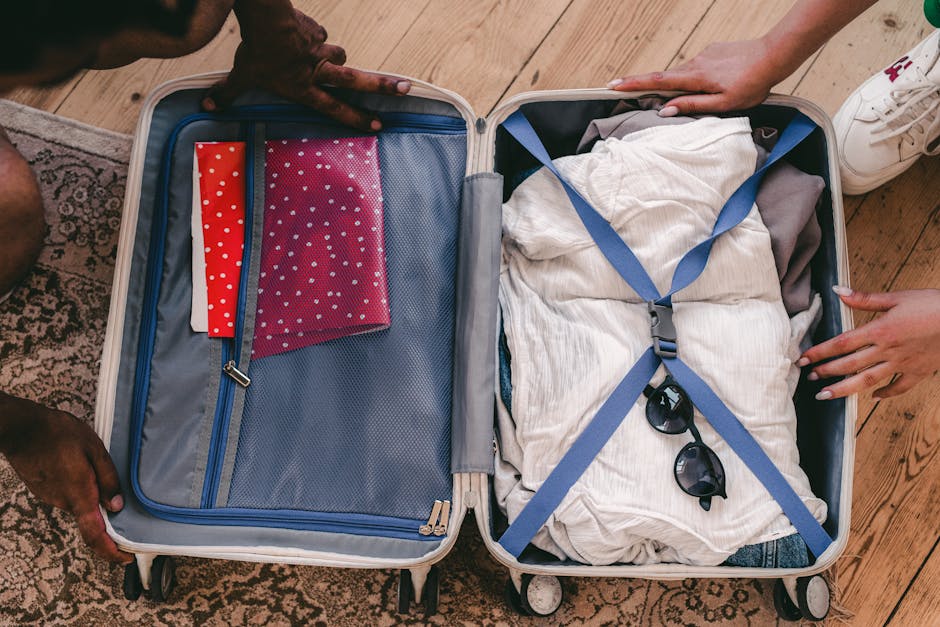
Many travelers start by thinking they need to buy a pre-made “travel kit” or an “all-in-one” solution. This is a common misconception, and frankly, a waste of money. These generic bundles often include items you don’t need, or worse, low-quality versions of things you do. Your travel accessory pack shouldn’t be a one-size-fits-all grab bag from a big box store. Instead, it needs to be a highly personalized, efficient collection of tools tailored to *your* travel style, destinations, and specific needs. Building your own pack ensures every item serves a purpose, fits your budget, and contributes to a smoother, lighter journey.
The goal isn’t to buy everything labeled “travel size.” It’s about strategic selection. Think of your accessory pack as a custom toolkit designed to solve common travel problems: staying charged, connected, comfortable, and organized. By focusing on genuine utility and quality, you avoid unnecessary bulk and ensure reliability when you’re far from home.
The Myth of the ‘All-in-One’ Travel Kit Debunked
The idea of a single, comprehensive travel kit that magically solves all your problems is appealing, but ultimately flawed. These kits, often found online or at airport shops, promise convenience but deliver compromise. They typically feature a collection of generic items: a tiny toothbrush, a flimsy eye mask, miniature shampoo bottles, and a questionable universal adapter. While the intention might be good, the execution rarely meets the demands of a seasoned traveler.
The core issue lies in personalization. Every trip is different, and every traveler has unique preferences. A business traveler flying for a single night has vastly different needs than a backpacker spending weeks in Southeast Asia. A family trip requires different considerations than a solo adventure. These pre-packaged kits fail to account for such nuances, forcing you into a set of tools that are either redundant, inadequate, or simply low quality. You end up buying more specialized items anyway, rendering the initial kit pointless.
Why Generic Kits Fall Short on Quality and Utility
Most mass-produced travel kits prioritize quantity over quality. The universal adapter included might be bulky and unreliable, potentially damaging your electronics. The sleep mask could be uncomfortable, letting in light. The toiletries might be harsh or unsuitable for your skin type. When you rely on cheap, generic items, you often face failures at critical moments – a dead phone battery because your adapter failed, or a sleepless night due to poor earplugs. Investing a little more in individual, high-quality components designed for specific tasks pays dividends in reliability and comfort.
The Economic Disadvantage of Pre-Packaged Solutions
While seemingly convenient, these kits often don’t save you money in the long run. You pay for items you don’t need, and then have to replace the low-quality items that inevitably break or underperform. For example, a basic kit might cost $25, but you might only use two or three items effectively. By contrast, spending $10 on a truly reliable travel adapter and $15 on a durable power bank gives you superior functionality for the same cost, with none of the wasted components. Building your pack piece by piece allows you to allocate your budget precisely where it matters most for your individual travel style.
Essential Categories for Your Personalized Travel Accessory Pack
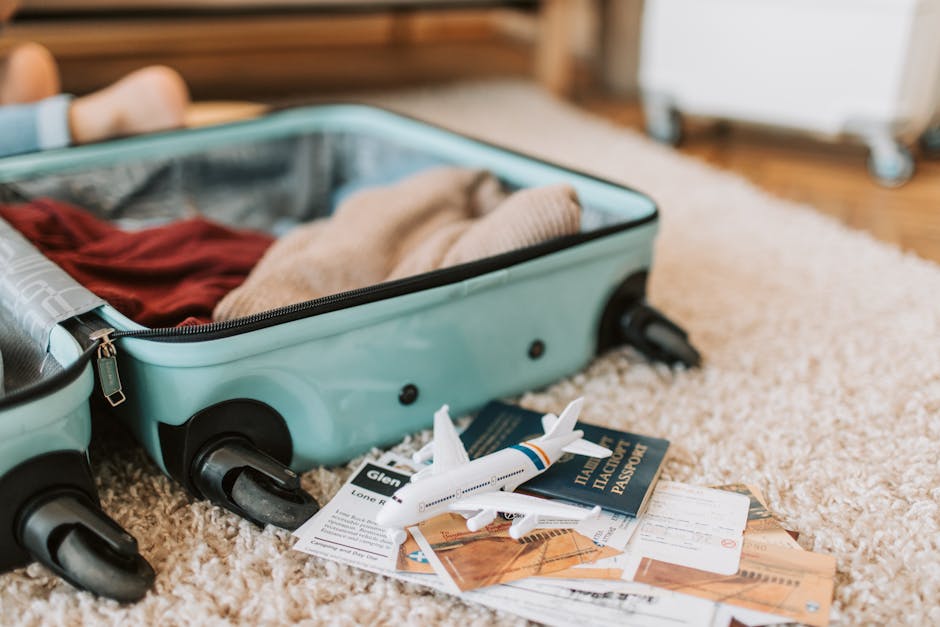
Building a genuinely useful travel accessory pack starts with understanding the core functions each item needs to fulfill. Instead of thinking of individual products, consider categories of need. This allows for flexibility and ensures you cover all bases without overpacking. Here are the fundamental areas you should address, serving as a checklist for your own custom setup:
- Power & Connectivity: This category is non-negotiable in modern travel. You need reliable ways to charge devices and stay online. Think about universal adapters, power banks, and strategies for internet access abroad. Reliability here prevents major headaches.
- Comfort & Wellness: Long flights, noisy environments, and unfamiliar beds can impact your well-being. Items like noise-canceling headphones, quality travel pillows, and essential personal care items make a huge difference in your ability to rest and adapt. Prioritize quality over bulk here.
- Organization & Security: Keeping your belongings tidy and safe is key to stress-free travel. Packing cubes, document organizers, and small security measures (like cable locks or money belts) contribute to peace of mind and efficient packing. You don’t want to be digging through a messy bag at airport security.
- Health & Safety: A small, customized first-aid kit, personal medications, and hand sanitizer are vital. Don’t rely on finding these items easily in every destination, especially specific brands or prescriptions. This is one area where preparation truly counts.
- Navigation & Information: While your phone often covers this, consider backup methods. A small notebook and pen, a physical map for emergencies, or a durable phone case are all part of ensuring you can find your way and record important details. Reliability is key.
- Personal Care & Hygiene: Beyond basic toiletries, consider items that enhance your comfort on the road. A quick-drying towel, a compact laundry detergent sheet, or specific skincare products can elevate your travel experience. Choose travel-sized versions of your favorites, not generic substitutes.
By breaking down your needs into these categories, you can systematically build a pack that addresses potential challenges before they arise. Each item you select should fit neatly into one of these functions, justifying its place in your limited luggage space. This structured approach prevents impulse buys and ensures a cohesive, highly functional travel kit.
Powering Up: Choosing the Right Universal Adapter and Power Bank
One of the most common travel frustrations is dead electronics. A reliable power solution is the backbone of any effective travel accessory pack. This means selecting a robust universal travel adapter and a high-capacity power bank. Don’t skimp here; cheap chargers can be dangerous and inefficient. Your goal is consistent, safe power delivery across different regions and for multiple devices.
For a universal travel adapter, look for models that combine multiple plug types (US, EU, UK, AU) into one compact unit. Critically, it must include USB-A and USB-C ports with Power Delivery (PD) capabilities. This allows you to charge smartphones, tablets, and even some laptops directly without needing extra wall chargers. Prioritize models with built-in surge protection and safety shutters for the outlets. The Zendure Passport III, for example, offers 65W PD via USB-C, alongside four standard USB ports, making it capable of charging a MacBook Air or multiple phones simultaneously. It costs around $60-70. Another strong contender is the Epicka Universal Travel Adapter, which provides 4 USB-A ports and 1 USB-C PD port up to 45W for about $25-30, a great value option.
A power bank is equally crucial. For most travelers, a capacity between 10,000mAh and 20,000mAh strikes the right balance between power and portability. A 10,000mAh bank can typically recharge a modern smartphone 2-3 times. A 20,000mAh bank might do it 4-5 times or provide a significant boost to a tablet or small laptop. Always check the output wattage on the USB-C PD port. For fast phone charging, aim for at least 18W. For tablets or small laptops, 30W-45W is ideal. The Anker PowerCore Slim 10000 PD (around $35) is excellent for daily phone top-ups, offering 20W USB-C PD. If you need more juice for multiple devices or longer trips, the Anker PowerCore III Elite 25600mAh (around $100) delivers 60W USB-C PD, capable of charging many laptops at full speed. Remember to fully charge your power bank before every trip.
Understanding USB-C Power Delivery (PD)
USB-C Power Delivery (PD) is not just a marketing term; it’s a standard that allows for much faster charging at higher wattages. This is essential for modern devices. When selecting an adapter or power bank, ensure the USB-C ports explicitly state “PD” and list a wattage (e.g., 45W PD). Without PD, your USB-C port might only deliver 5W-10W, which is slow for phones and almost useless for laptops.
Airline Restrictions for Power Banks
Most airlines restrict power banks (lithium-ion batteries) to carry-on luggage only. There are also limits on capacity, typically 100Wh (watt-hours) or less. A 20,000mAh 3.7V power bank is approximately 74Wh, well within most limits. Always check your airline’s specific policy if you’re carrying multiple large power banks, but generally, a single 25,600mAh bank is acceptable in your carry-on.
Staying Connected: Portable Wi-Fi vs. eSIM vs. Local SIM

Staying connected while traveling is no longer a luxury, but a necessity. Deciding on the best method for internet access depends heavily on your destination, duration, and data needs. Each option has distinct advantages and disadvantages.
| Connectivity Method | Pros | Cons | Ideal Use Case | Estimated Cost (per week) |
|---|---|---|---|---|
| eSIM (e.g., Airalo) | Instant activation, no physical SIM swap, multi-country plans. | Requires eSIM-compatible phone, data-only (no local number for calls). | Solo travelers, short trips, multiple countries, data-heavy users. | $8 – $30 (1GB-5GB) |
| Local Physical SIM | Often cheapest per GB, local number for calls/texts, supports all phones. | Requires finding a store upon arrival, physical SIM swap, can be confusing. | Longer trips, single country, need local number, budget-conscious. | $5 – $20 (various data plans) |
| Portable Wi-Fi (e.g., GlocalMe) | Shareable with multiple devices/people, consistent Wi-Fi signal, own device. | Another device to carry and charge, higher upfront cost for device, potentially slower. | Groups/families, business travel, heavy laptop use, privacy concerns. | $25 – $50 (device rental or data package) |
For most individual travelers with a modern smartphone (iPhone XS or newer, recent Samsung Galaxy/Pixel), an eSIM service like Airalo is the clear winner for convenience. You can purchase and activate a data plan before you even land, ensuring you have internet access the moment you arrive. Plans are available for single countries or entire regions, making it flexible. You keep your home SIM active for calls/texts if needed, but data routes through the eSIM.
If you’re traveling for an extended period in a single country and prioritize cost-effectiveness or need a local phone number, a local physical SIM card is often the best choice. This requires a quick stop at an airport kiosk or a local phone store upon arrival. Be prepared with your passport, as some countries require registration.
Portable Wi-Fi devices, like the GlocalMe G4 Pro (device cost around $150, then data packages), are excellent for families or groups who want to share a single internet connection. They’re also useful if you’re traveling with multiple Wi-Fi-only devices (laptops, tablets) and don’t want to tether from your phone. However, it’s one more gadget to charge and carry.
My recommendation is an eSIM for flexibility and ease. It streamlines arrival and keeps you connected instantly. For non-eSIM compatible phones, a local SIM is the next best option for value.
Comfort on the Go: Noise-Canceling Headphones and Travel Pillows
Do not underestimate the power of true comfort while traveling. Investing in high-quality noise-canceling headphones and a supportive travel pillow isn’t a luxury; it’s a strategic move to preserve your sanity and energy on long journeys. These items are non-negotiable for anyone who values rest and personal space in often chaotic environments.
For noise-canceling headphones, the market leader for a reason is the Sony WH-1000XM5. At around $350-400, they are an investment, but their active noise cancellation (ANC) is unparalleled, especially against low-frequency engine hums on planes. The sound quality is excellent for music and podcasts, and their battery life (around 30 hours with ANC) is more than enough for even the longest flights. The alternative, the Bose QuietComfort Ultra (also $350-400), offers a slightly different sound profile and similarly excellent ANC, often preferred for its comfort on smaller heads. Either of these will transform your travel experience, allowing you to create a quiet sanctuary in a noisy plane cabin or bustling train. They truly block out the world, letting you sleep, read, or simply relax.
A good travel pillow is equally important. Forget the inflatable U-shaped pillows; they offer minimal support. My top recommendation is the Trtl Pillow (around $40). This unique design wraps around your neck like a scarf, using an internal rib structure to support your head in an ergonomic position. It’s compact, machine-washable, and incredibly effective at preventing neck strain, in a window or aisle seat. Unlike bulky U-shaped pillows, it doesn’t push your head forward. It simply holds it upright or slightly to the side, allowing for actual rest. The Trtl Pillow Plus (around $60) offers adjustable height, making it even more customizable.
Why Cheap Alternatives Fail
Budget headphones often have weak ANC, only slightly muffling noise rather than truly canceling it. Cheap travel pillows offer inadequate support, leading to more neck pain than relief. These are two categories where spending a bit more up front directly translates to significantly improved comfort and, crucially, better sleep while in transit. Don’t compromise your rest for a few dollars; the benefits of arriving refreshed are priceless.
What’s the Best Small Daypack for City Exploration?
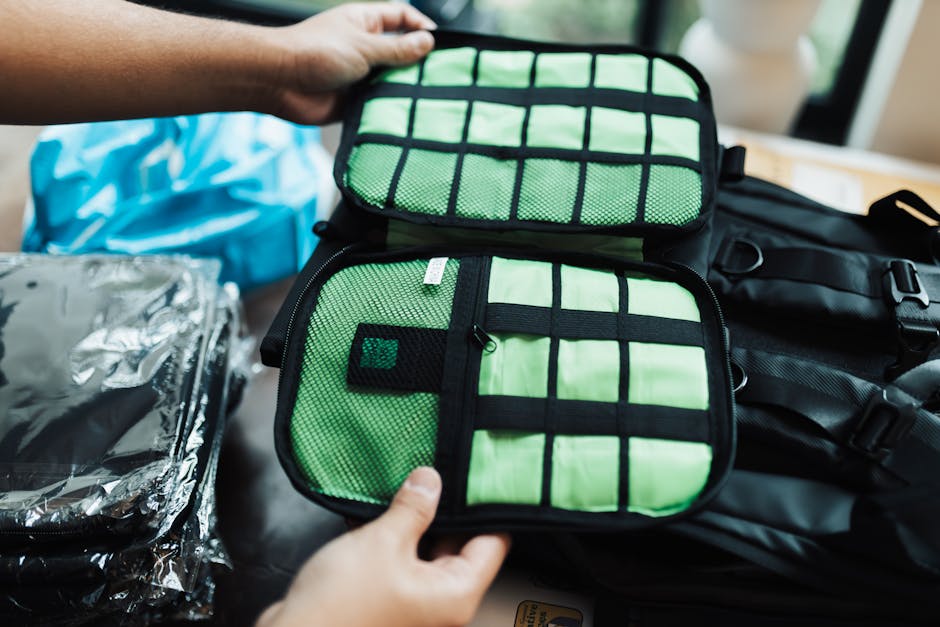
A crucial item in any travel accessory pack is a reliable, lightweight daypack. This isn’t your main luggage; it’s the bag you carry around daily for essentials when exploring a city, hiking a trail, or heading to the beach. It needs to be comfortable, durable, and not overly bulky.
What features should a good travel daypack have?
A good travel daypack should prioritize packability, comfort, and a reasonable level of weather resistance. Look for a capacity of 15-25 liters, which is enough for water, snacks, a light jacket, camera, and small souvenirs. It should have padded shoulder straps, a main compartment, and at least one easy-access exterior pocket. Water bottle pockets on the side are a huge plus. The material should be lightweight nylon or ripstop, durable enough for daily use but not adding significant weight to your overall luggage.
How important is packability for a daypack?
Extremely important. The best travel daypacks are designed to compress or fold down into a small pouch or its own pocket, fitting easily inside your main luggage. This saves valuable space when you’re moving between destinations and only need your larger bag. When you arrive, you simply unpack it, and it’s ready for use. Daypacks that don’t pack down become awkward extra items to carry.
Which daypack models are recommended for travelers?
For sheer packability and durability, the Matador Freefly Packable Daypack (16L, around $65) is a standout. It’s made from waterproof Cordura ripstop nylon, weighs just 6.6 ounces, and compresses down to the size of a small wallet. It’s perfect for light excursions and sudden rain showers. For something a bit more substantial with better organization and comfort for longer walks, the Osprey Daylite (13L, around $60) is an excellent choice. It doesn’t pack down quite as small as the Matador but offers better back panel ventilation, more robust straps, and additional pockets for better organization. It’s also designed to attach to larger Osprey packs, which can be useful if you’re an Osprey user. The Daylite is heavier at around 1.1 lbs but provides a more structured carry. Choose Matador for ultra-light minimalists, Osprey for comfort and slight more capacity.
Final Thoughts on Minimizing and Maximizing Your Carry
Building a personalized travel accessory pack is an ongoing process of refinement. Every trip teaches you something new about what you truly need and what just adds bulk. The goal is a highly curated collection, not a static list. As technology evolves and your travel habits shift, so too should your accessory choices. Stay curious about new gadgets and smarter packing strategies; the perfect pack is always one innovation away.